
























Felicity Solar Inverters: A guide for South Africans

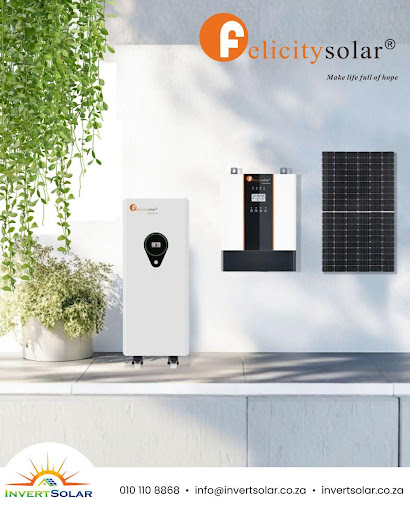
Are you a South African homeowner or small business trying to decide which Felicity Solar inverter is right for your backup or solar system? We’ve got you covered. In short, choosing the right inverter comes down to how you use power during load-shedding, your peak demand (kW), and whether you want grid support or full independence.
We’ll explain the difference between hybrid and off-grid inverters, show you how to size an inverter correctly, and outline what to consider if you plan to add solar panels or expand later. Let’s go!
Who is this Felicity Solar inverter guide for?
This guide is designed for:
- Homeowners installing or upgrading a load-shedding backup system
- Customers adding solar panels to an existing battery setup
- Small businesses that need stable power during outages
If you already have a Felicity battery, or are planning to, this guide helps you choose an inverter that allows that battery to perform properly and last longer.
What does a Felicity Solar inverter do?
An inverter is the control centre of your backup or solar system. It converts stored battery energy into usable power and manages how electricity flows between the grid, battery, and solar panels. Even a well-sized battery will underperform if the inverter is undersized or poorly matched.
A Felicity Solar inverter is responsible for:
- Supplying power automatically during load-shedding
- Switching smoothly between grid and battery
- Managing solar generation if panels are installed
- Protecting batteries through controlled charging and discharging
Felicity Solar hybrid vs off-grid inverters: what’s the difference?
The choice between a hybrid and off-grid Felicity inverter depends on how much you rely on the grid and how predictable your energy use is.
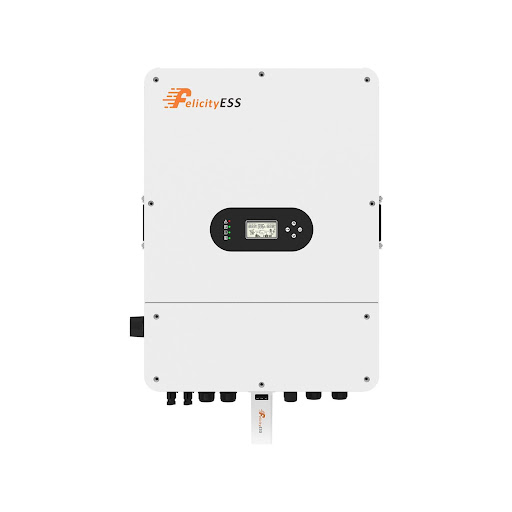
Felicity Solar hybrid inverters (best for most SA homes)
Hybrid inverters work with the grid, batteries, and solar panels together, making them the most practical option for most South African households. Hybrid systems balance solar, battery, and grid power automatically, making them seamless in daily use.
A Felicity hybrid inverter is ideal if you:
- Experience regular load-shedding but still have grid access
- Want automatic switching during outages
- Plan to add solar panels now or later
- Want flexibility without fully disconnecting from Eskom
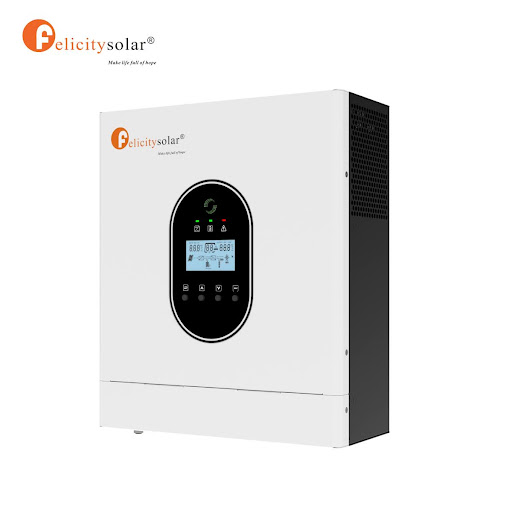
Felicity Solar off-grid inverters (for full independence)
Off-grid inverters operate without grid support, relying entirely on solar generation and battery storage. These systems require careful sizing and planning, as there is no fallback if solar generation is low.
They are best suited to:
- Farms and rural or remote properties
- Areas with no grid access or a very unstable supply
- Users who want complete energy independence
Quick decision rule
If you have grid access, a Felicity hybrid inverter is usually the better starting point. If grid access is unreliable or unavailable, a Felicity off-grid inverter is the right choice.
How to choose the right Felicity Solar inverter size
When selecting an inverter, the key factor is peak power demand, not average daily consumption.
Understanding peak demand (kW)
Peak demand is the highest amount of power your home or business may draw at once. Some appliances create short surge loads when starting. Common surge contributors include fridges, freezers, pumps, kettles, and microwaves.
For example, a typical family home running lights, Wi-Fi, a TV, and a fridge may average low usage, but the fridge compressor starting while a kettle is on can briefly push demand well above 3kW. Your inverter must handle these moments without tripping.
Typical Felicity Solar inverter sizes for South Africa
While every system should be sized individually, these ranges work well in practice:
- 3kW inverter: apartments and light essential loads
- 5kW inverter: most family homes (most popular choice)
- 8–12kW inverter: large homes and small businesses
Tip: If your system is borderline, it’s generally better to size up slightly than risk frequent overloads.
Matching your Felicity inverter with the right battery
Inverters and batteries must be sized as a balanced system. A large battery with a small inverter limits usable power, while a powerful inverter with too little battery capacity drains quickly.
When pairing Felicity inverters and batteries, ensure system voltage matches (commonly 48V). Confirm charge and discharge limits are compatible, and consider any future battery expansion possibilities.
Solar readiness and future expansion planning
Even if you’re starting with a battery-only backup, choosing a solar-ready Felicity inverter is strongly recommended. A well-chosen inverter should support future solar panel input and allow for additional battery capacity later to avoid costly replacement when you expand.
Common Felicity Solar inverter mistakes to avoid
Most inverter problems come from planning errors rather than faulty equipment. Avoiding these mistakes improves reliability, efficiency, and battery lifespan.
Avoid these mistakes:
- Choosing an inverter based only on price
- Ignoring surge loads
- Selecting off-grid when a hybrid would suffice
- Not planning for solar or battery expansion
FAQs: Felicity Solar inverters
Is a Felicity hybrid inverter enough for load-shedding?
Yes. For most homes, a hybrid inverter paired with a correctly sized battery is more than sufficient.
Can I add solar panels later to a Felicity inverter?
Yes, if the inverter is solar-ready. Planning for this upfront avoids replacement costs.
Do I need an off-grid inverter to be independent?
Not necessarily. Many users achieve excellent independence with hybrid systems and sufficient storage.
What size battery do I need for a Felicity 5KVA inverter?
You’ll usually need a battery with a capacity of at least 10kWh, more likely, up to 13.5 kWh. How many depends on the type of battery you install.
What to do next
Choosing the right inverter upfront ensures reliable backup, smoother performance, and flexibility as your energy needs evolve. When you’re deciding which Felicity Solar inverter is right for your system, remember that clarity now prevents costly changes later.
- Explore Felicity Solar inverters to compare available models
- Ask us to help you size your inverter correctly based on your loads
- Read the Felicity compatibility guide to ensure your system is balanced
